
Practical AI training for the whole staffroom
AI training for schools is practical professional learning for teachers and staff, including curious, cautious and overloaded colleagues. Sessions help participants explore relevant uses of AI, ask better questions and leave with safer next steps within school policy.
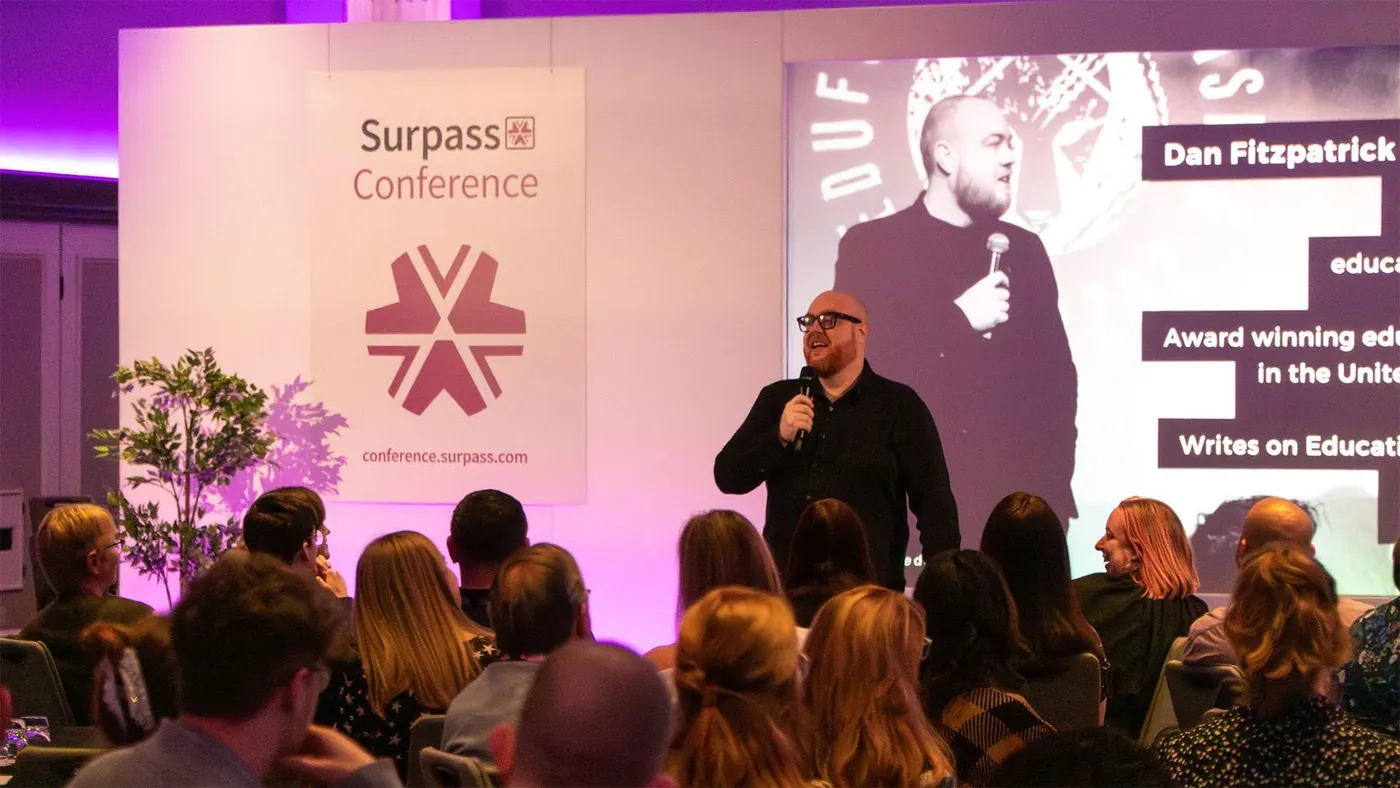
In brief: Dan Fitzpatrick, The AI Educator, is an AI training provider for schools, trusts and districts, delivering INSET days, twilight sessions, leadership workshops and longer staff programmes. He has trained more than 150,000 educators in over 30 countries, in person and online, across the UK, the United States, Europe, the Middle East and Asia-Pacific.
How it works
Sessions use hands-on activities rather than assuming one level of confidence. Staff can apply a framework, such as PREP or EDIT, to material from their own context and discuss when an AI-assisted approach is inappropriate. Examples are framed for education, but each school remains responsible for its policies, approved tools, data protection, safeguarding and professional decisions.
“Safe, inspiring, thought-provoking, and practical.”
Available formats include INSET and twilight sessions as well as longer programmes, delivered in person or virtually. The appropriate format and scope are agreed for the school rather than presented as a universal route to adoption.
Capability, not dependence
Good AI training should still be working after the tools change. Dan's sessions focus on the judgement that lasts: knowing when AI helps and when it does not, checking outputs for errors and bias, and keeping the thinking that learning depends on with teachers and students. In his words: outsource the doing, not the thinking.
The test Dan uses is simple. If a particular tool were withdrawn tomorrow, would your staff still be better at their jobs? Training that only demonstrates software builds dependence. Training that builds judgement builds capability, and it guards against never-skilling, where people never learn the skill AI is doing for them, and deskilling, where skills they had begin to fade.
Sample formats and agendas
Every programme is shaped with you in a planning conversation. These are examples of how schools, trusts and districts use the time, not fixed packages.
Full-day INSET for a school or trust
Best for: Whole staff on an INSET or professional development day.
- Morning: a keynote for all staff on what AI changes and what stays human, for example Thinking With Machines.
- Late morning: hands-on workshops by phase or department, using the school's approved tools on real tasks such as planning, feedback and adapting resources.
- Afternoon: a guardrails and assessment session on verification, bias, privacy, safeguarding and academic integrity, ending with agreed next steps for each team.
Half-day senior leadership intensive
Best for: Senior leadership teams, trust executives and district cabinets.
- Where AI is already showing up in your school or district, often out of sight.
- The decisions only leaders can make: policy, assessment, safeguarding, workload and procurement.
- A first draft of priorities and owners, using the Seven Lessons sequence.
- Agreed next steps for the coming term.
Multi-session cohort and AI champions pathway
Best for: Schools and trusts that want capability to stay in house.
- A group of staff meets over several sessions across a term or a year.
- Each session builds skill and tests one bounded use in their own context.
- Champions learn to support colleagues, so progress does not depend on an outside trainer.
- Runs online or in person, and can sit alongside leadership coaching.
Best for
Leadership teams who know part of their staffroom is cautious, sceptical or simply overloaded, and want those concerns included in practical learning.
Frequently Asked Questions
01What if half our staff don't want to be there?
Caution is treated as useful information, not something to argue away. Activities allow staff to test relevant examples, question limitations and identify where existing practice should remain unchanged.
02Is this hands-on or a lecture?
Sessions are hands-on. Staff work through education examples and can apply a framework to their own context, while checking outputs rather than treating them as ready to use.
03What outcome should we expect from training?
Training is intended to build shared understanding and practical confidence. It does not replace school policy, leadership decisions or subject expertise, and no particular adoption or impact level is guaranteed.
04What safety boundaries are covered?
Sessions can address verification, bias, privacy, safeguarding, intellectual property and the need for human oversight. They are educational rather than legal advice, and activities should use tools and data approved by your school.
05Should training come before an AI strategy?
It depends on your starting point. A small, bounded session can help leaders learn before setting direction; where tools are already being used inconsistently, leadership may need to establish guardrails first. Strategy sets direction, while training builds staff capability within it.
06How far ahead should we book an INSET day?
Dates at the start of each term and on common INSET days go first, so most schools book a term or more ahead. Short-notice dates are sometimes possible, so it is always worth asking. Every enquiry receives a reply within one working day.
07Can training be delivered online as well as in person?
Yes. Dan delivers in person across the UK, the United States, Europe, the Middle East and Asia-Pacific, and live online sessions timed for your time zone. Many schools combine an in-person day with shorter online follow-up sessions.
08Can training be tailored for primary, secondary, further and higher education?
Yes. Examples, tasks and boundaries are chosen for your phase: primary and elementary, secondary and high school, further education colleges and universities. Sessions for support and administrative staff can run alongside sessions for teaching staff.
Next steps
Start a conversation about what comes next.
Share a few details about you, your organisation or event. Dan personally reviews every enquiry.
Book Now